TAKEAWAYS
The 20th Singapore Corporate Awards (SCA), arguably the Oscars for listed companies in Singapore, concluded recently with a glittering ceremony at The Ritz-Carlton, Millenia Singapore on September 1. Presented annually, SCA honours listed companies big and small, which have demonstrated excellent corporate governance practices.
One critical and quintessential facet of corporate governance is transparency, and this includes financial transparency. How do listed companies exhibit financial transparency? One main avenue is via their published annual reports. The annual report furnishes stakeholders with information to assess the financial performance and overall financial health of a listed company. It also discloses future strategies and plans, offering insights into the company’s long-term growth and development potential. All in all, the annual report facilitates stakeholders in their decision-making process, and is a much relied-upon public-facing document of a listed company.
Given the significance of the annual report, it is a massive honour to win the Best Annual Report Award, one of the prestigious awards of SCA. Qian Hu Corporation Ltd (Qian Hu) bagged the Gold Award for Best Annual Report (small-cap category) at the SCA event.
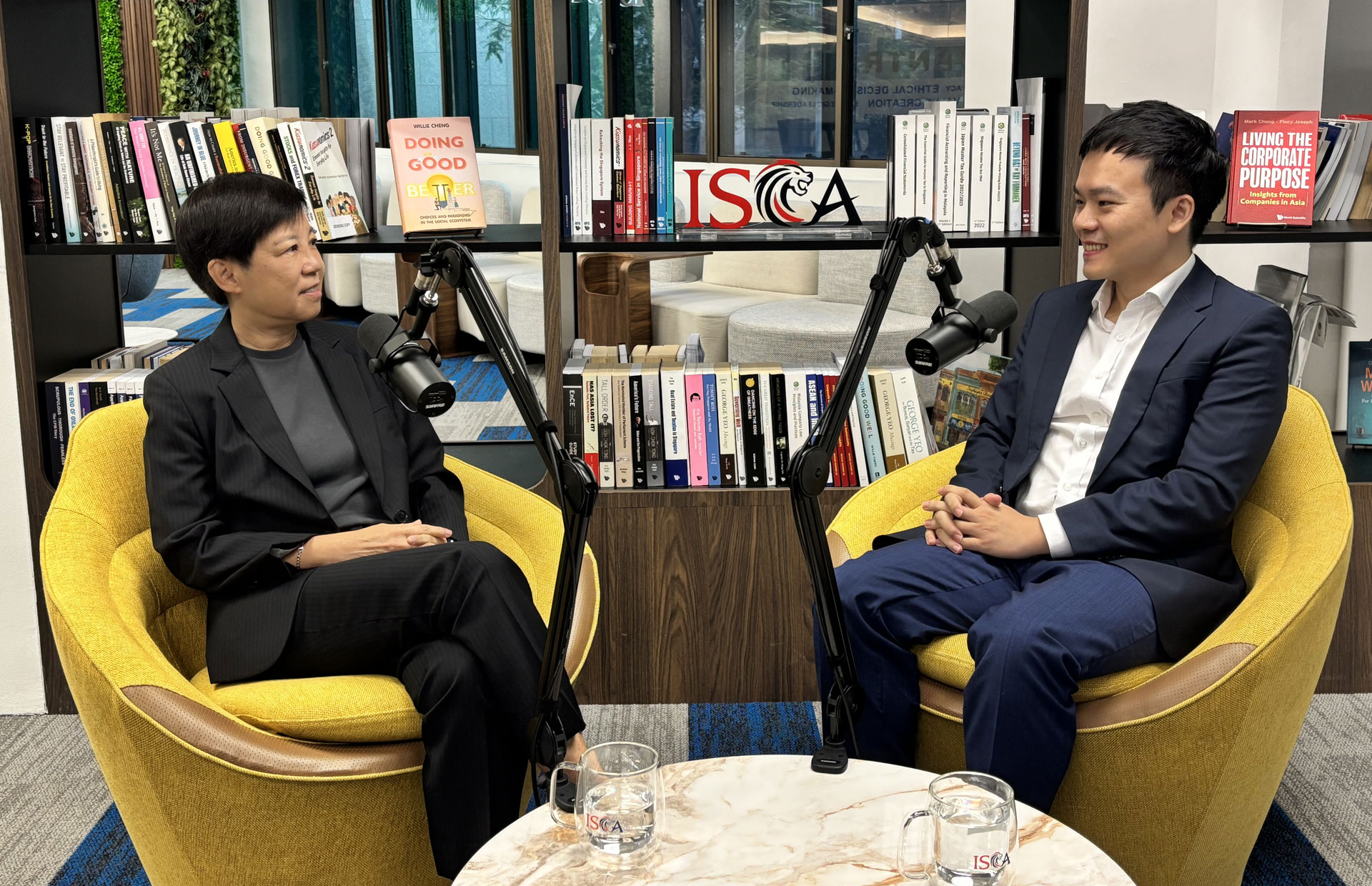
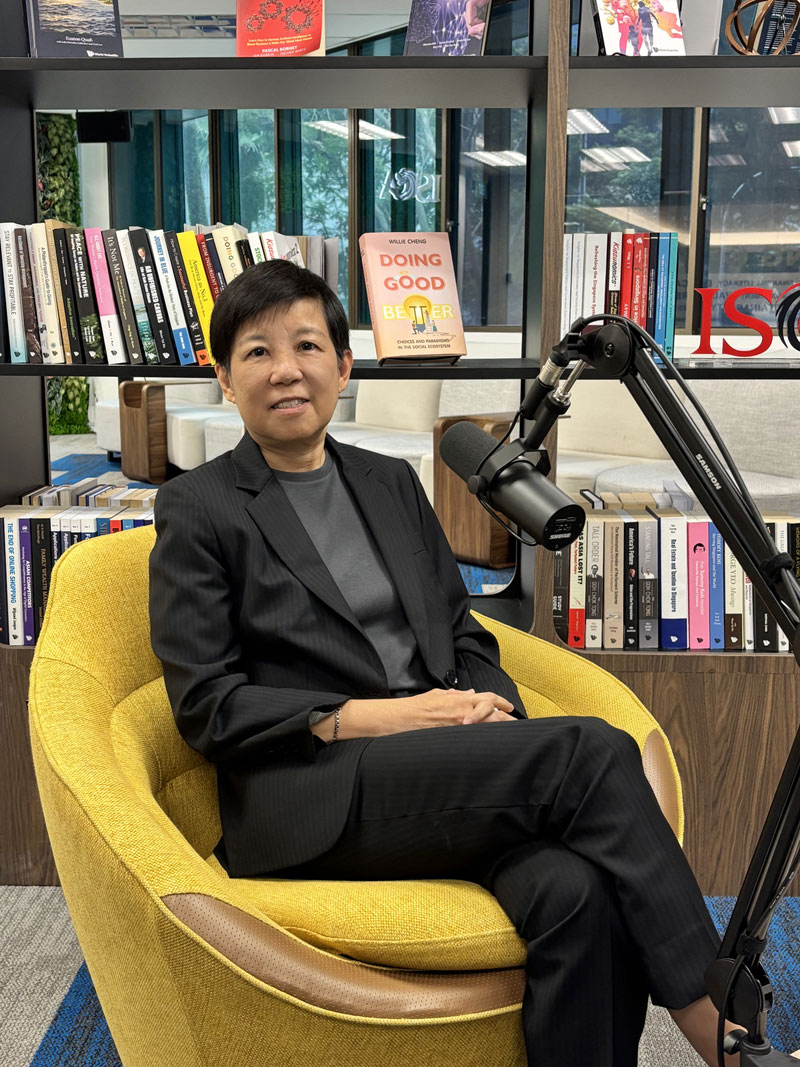
In a CA Listen vodcast, Ms Lai Chin Yee, FCA (Singapore), Finance Director of Qian Hu, shared that the win is a testament to the company’s ethos of responsible reporting and firm belief that the right thing to do in corporate reporting is to be honest and upfront.
Qian Hu uses reporting as a strategic tool to build trust with stakeholders. The company sees the annual report not just as a regulatory requirement, but a form of conversation – a direct, transparent, and engaging way to communicate its journey, values, and future direction. When done right, this type of relevant and meaningful reporting can be truly transformative, enhancing both credibility and stakeholder confidence in a way that numbers alone can never do.
There is no magic formula to producing an award-winning annual report but, as shared by Ms Lai, there are some guiding principles that are worthy of consideration. Firstly, be clear about what is communicated, that is, the contents must be easily understood by readers. This can be achieved by, for example, simplifying technical jargons, using infographics (the adage that “a picture is worth a thousand words” applies here, she pointed out), and giving short, direct explanations.
Secondly, be genuine about what is being said. Stakeholders very much value open and candid communications. They want to know the context behind the financial results, regardless of whether they are good or bad. It would be unwise to simply convey that everything is hunky-dory and gloss over the problems.
Thirdly, be consistent in aligning to any long-term strategy. It is important that companies keep stakeholders updated on the progress towards long-term goals in the annual report, to demonstrate accountability.
When it comes to producing high-quality corporate reporting, Ms Lai reckoned that size does not really matter. At the end of the day, intent is key. If a small listed company truly intends to engage in responsible reporting, traits such as a right mindset and creativity are more desirable than having an abundance of resources at its disposal. It can excel with the drive, determination and desire to go the extra mile, to perform better.
In addition, a small listed company compensates for its lack of size with other positive qualities. It is more agile as departments can be mobilised quickly to get things done. It is easier as well to foster a strong sense of identity for a more coherent organisational voice.
Hence, it is by no means a foregone conclusion that a small listed company cannot produce exemplary corporate reporting.
In driving purposeful and transparent communications with corporate reporting, the person behind the wheel is, more often than not, the Chief Financial Officer (CFO).
Over time, the role of the CFO has changed to include that of a storyteller, to narrate a company’s financial story that can relate to its stakeholders. As Ms Lai submitted, “CFOs are uniquely positioned at the intersection of data, strategy and governance.” Thus, they are well-placed to connect the dots from financial planning and analysis, risk management, and sustainability, to operations and strategic business decisions.
Furthermore, to tell a good story, CFOs need to anticipate concerns from different stakeholder groups so that these can be adequately addressed by a consistent annual report. Internally, CFOs must also be willing and able to raise tough questions to get clear answers even though this may create discord with fellow colleagues.
Listed companies must be laser-focused on what matters most to their respective stakeholders in the annual report. They have to be very deliberate with the contents for relevance, be more thoughtful in terms of the language and words used for understandability, and be more creative in design and graphics for visual attractiveness. This will produce a good annual report that will captivate its audience.