



TAKEAWAYS
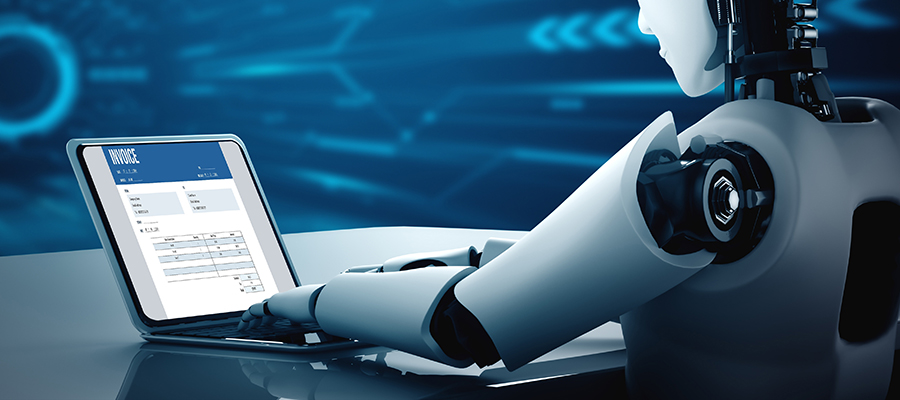
While much has been said about the potential of automation and artificial intelligence (AI) to revolutionise the way entire industries work, the implications of AI for tax are often overlooked. As Singapore advances towards a wider mandate for electronic invoicing (e-invoicing), the confluence of e-invoicing and the rapid development of automation and AI is more than a compliance exercise; it presents an opportunity for businesses to transform their finance operations.
Traditional invoicing processes have long depended on fragmented practices, with inconsistent fields, manual intervention, and variable documentation standards across business units and jurisdictions. For large corporates, these inconsistencies have translated into control challenges, audit delays and avoidable tax risk.
E-invoicing can help to mitigate these inconsistencies by automating the digital exchange of invoice data between vendors’ accounting systems and those of their customers’. The automation enables a more seamless, secure and efficient data-sharing process that compares favourably with the sending of invoices as PDFs via post or email.
By enforcing standardised data fields, timestamps and authentication at the point of issuance, e-invoicing elevates the quality and reliability of invoice-level evidence. Finance teams, auditors and tax authorities benefit from cleaner data, clearer audit trails and less ambiguity. The structured data also gives organisations something they have never had at scale – transaction integrity by default. With structured data at source, large corporates can now accelerate automation across the finance value chain.
For Singapore, e-invoicing comes in the form of GST InvoiceNow, which allows transaction cycles to be processed without manual intervention. The three-way matching process between invoices, purchase orders and delivery receipts can be done in an instant. Structured invoicing reduces human variability, thereby lessening control weakness and the associated process risk. The outcome is that internal controls are strengthened, while operational efficiency soars.
E-invoicing is not only a game changer for indirect tax, namely Goods and Services Tax, it can also improve data quality for direct tax matters by producing cleaner transaction data and more consistent account mappings that feed into corporate tax and transfer pricing processes. This is particularly relevant for intercompany transactions, which are a focal point of scrutiny by tax authorities, and where supporting documentation is often found to be inconsistent and poorly aligned with transfer pricing policies. When authorities assess alignment between transactional evidence and substance, deficiencies in invoice quality can undermine the completeness and accuracy of a company’s financial and accounting position.
Structured invoicing offers a practical and scalable solution. It enables consistent descriptions of services and cost drivers, accurate and auditable approval timestamps, uniformity across regional enterprise resource planning (ERP) platforms and end-to-end traceability of intra-group flows. For multinational groups, Singapore’s GST InvoiceNow reinforces the foundation underpinning transfer pricing models globally.
It is worth noting that tax authorities globally are moving towards real-time or near real-time digital reporting. Singapore’s direction mirrors emerging models in Europe, Latin America and parts of Asia, where tax reviews are no longer episodic – they are effectively continuous.
This shift raises expectations around data quality. When invoice data is transmitted directly or near-directly to authorities, there is no room for post-submission clean-up. Structured data becomes essential to support real-time risk modelling, algorithmic anomaly detection, continuous controls monitoring and future digital tax submission models. GST InvoiceNow aligns Singapore with this global momentum and gives corporates the opportunity to modernise before mandates become more demanding.
Since generative AI burst onto the global stage in recent years, major organisations have been exploring how they can enhance their finance and tax processes. A fundamental roadblock so far has been the quality, consistency and completeness of the underlying data that feeds into AI systems. GST InvoiceNow provides a timely solution.
With richer and more reliable invoice-level information made possible by e-invoicing, generative AI can be deployed in a multitude of ways. It can explain variances and reconcile exceptions, draft audit responses supported by verifiable evidence, identify transaction anomalies or control breaches, predict tax risks and generate real-time insights and automate the compilation of compliance reports. This combination of structured data and generative AI enables a shift from periodic to predictive, continuous risk management.
The Inland Revenue Authority of Singapore (IRAS) has provided a clear implementation timeline for the initial phases of e-invoicing, and subsequent phases are expected to include the wider GST-registered population. Large enterprises should view this change not as a risk but an opportunity.
By embedding GST InvoiceNow into the ERP system modernisation timeline, shared service centre redesign and tax technology programmes, organisations can establish stronger data and control foundations, achieve greater integrated regional finance operations and accelerate faster adoption of AI-enabled workflows. Over the longer term, this also supports a reduction in the cost of compliance. GST InvoiceNow should therefore be seen not as an isolated regulatory requirement but as a core enabler of finance transformation.
Singapore’s move towards GST InvoiceNow is part of a larger global trend of transformation and digitalisation in tax and finance. For large corporates, structured invoicing is becoming integral to maintaining trust, ensuring defensibility and enabling automation at scale. It strengthens documentation quality, enhances transparency, tax risk management and elevates governance standards.
As businesses prepare for the next phases of e-invoicing implementation, the most forward-looking organisations will not simply comply, they will leverage GST InvoiceNow as the starting point for a smarter tax and finance ecosystem.
Richard Mackender is Indirect Tax Leader, Deloitte Singapore and Asia Pacific; Andreas Kirsch is Business Tax Director, Deloitte Singapore, and Dr Ong Siew Yong is Tax Technology Consulting Director, Deloitte Singapore.