
Economic indicators like GDP have long been the standard yardsticks for progress. In recent years, other criteria such as social, governance, innovation, and environmental factors are also being considered in global rankings. Singapore, despite its small size, has consistently done well across various benchmarks in international rankings.
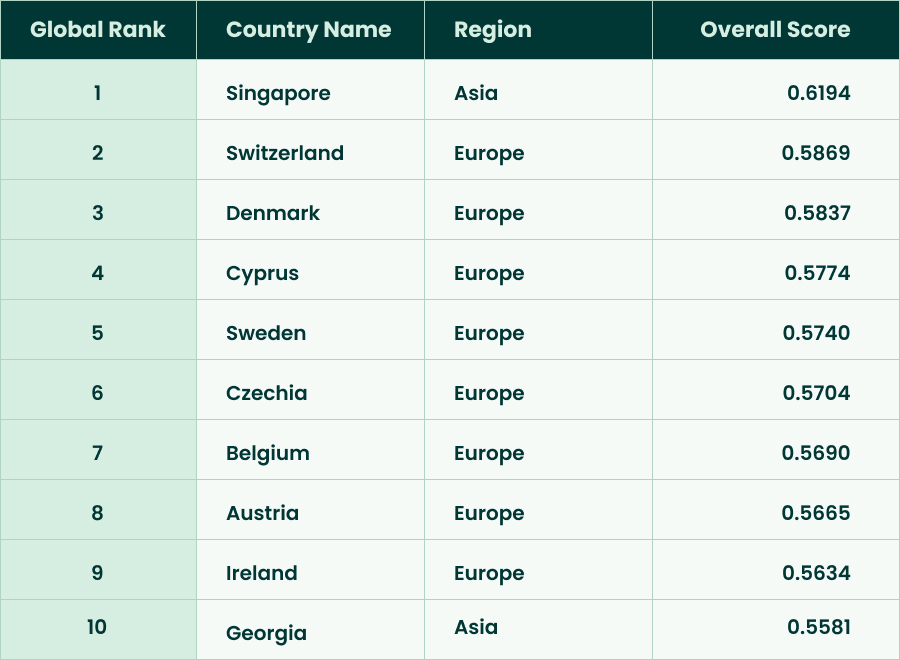
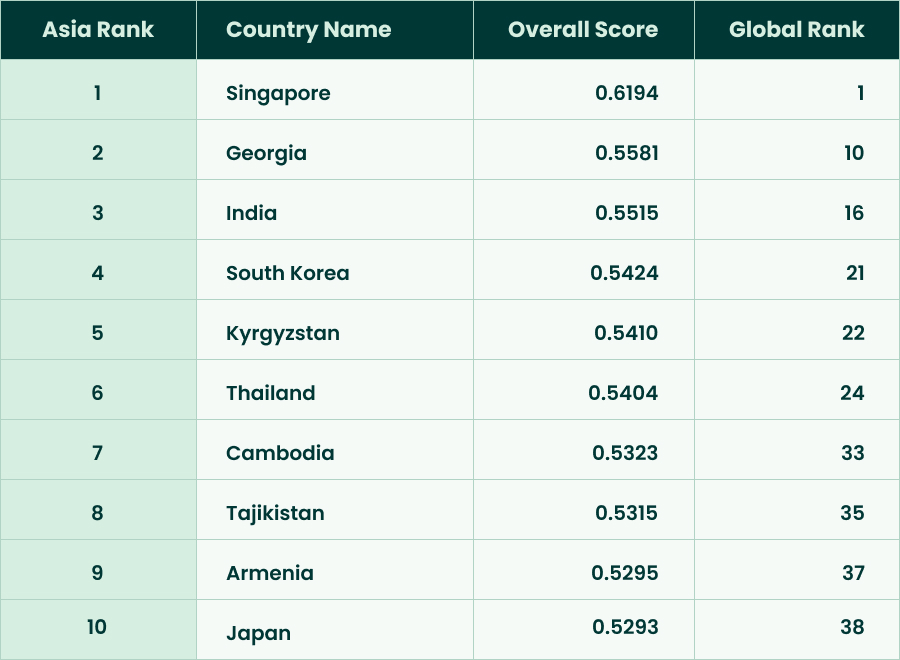
The inaugural Responsible Nations Index (RNI) is a case in point, with Singapore topping the global list. Singapore is also the only Asian country to make the Global Top 10.
The RNI, grounded in three years of research, assesses countries by how responsibly they act toward their citizens, the environment, and the wider world. Findings from the inaugural 2026 report, released in April, challenge long-held assumptions that economic strength is the result of sound governance. In fact, some of the world’s richest nations fall short on climate action, peaceful engagement, and fair distribution of welfare.
Meanwhile, a number of developing countries demonstrate stronger performance in environmental protection and maintaining the peace, which highlight that responsibility is driven more by political choices than financial capacity. According to the report, “RNI marks a radical shift in the global narrative, asserting that responsibility, not power, is the defining measure of leadership in the modern world.”
The RNI was launched by World Intellectual Foundation, Jawaharlal Nehru University, and Indian Institute of Management-Mumbai in January this year. Data, drawn from widely recognised and publicly accessible global sources like the World Bank, United Nations, World Health Organisation, International Labour Organization, and World Justice Project, is used to create a “responsibility score” for the 154 nations in the research. The RNI framework assesses them based on four key pillars:
Switzerland, Denmark, and Sweden continue to lead the rankings, driven by rule of law, social protection, and governance integrity, and combined with consistent environmental action. Their performance indicates long-term alignment between welfare systems, sustainability, and global cooperation.
In contrast, other high-income economies like Australia, the United Kingdom and United States show a more mixed picture. While they benefit from strong institutions and economic scale, these are often offset by weaker environmental commitment and external responsibility scores. As a result, the countries sit just below the top tier.
Europe and Central Asia perform strongly overall, with many countries scoring above the global median, backed by solid governance, social systems, and institutional accountability. However, internal variation remains significant, indicating that regional advantage does not translate into uniform responsibility.
East Asia and the Pacific tell a much more varied story. While some countries have very high responsibility scores, especially in economic resilience and human development, others remain clustered around the median, reflecting divergent development models and governance approaches within the same region.
Singapore leads the RNI with a score of 0.6194. According to the report, “the city-state sets the global benchmark for Ethical Governance. Its ability to marry high economic output with near-zero corruption and world-class social services provides a model for the future”. Singapore’s scores include:
Global top 10, RNI 2026
Asia top 10, RNI 2026
Related articles on CA Lab: