Digital tools, while making life easier, is also creating tension due to information overload and multiple platforms. This is according to AIA Singapore’s latest Live Better Study, which reveals a paradoxical relationship between Singapore residents and technology, in managing their wellness. The findings1 were shared in April 2026.
While the majority acknowledged that technology improves their overall quality of life (71%) and helps them stay informed and make better lifestyle decisions (74%), many still feel simultaneously overwhelmed and less empowered. More than half (58%) of respondents feel truly in control of their health through digital means, and are in fact experiencing overwhelm caused by the sheer volume of information available online (61%).
The study, conducted from December 2025 to January 2026, leverages the Holistic Wellness Index to investigate the latest state of wellness in Singapore, and how technology plays a part in supporting individuals’ journey towards holistic wellness across five aspects. Designed and formulated by AIA Singapore, the Index is founded on the premise that Singapore residents’ perspectives towards happiness in life is multi-faceted, and spans physical, financial, mental, social and spiritual aspects, which help them to live healthier, longer, better lives.
“We believe in the importance of human-centric innovation that simplifies, rather than complicates, the wellness journey. Technology must serve as a powerful enabler, but it cannot replace the empathy and trusted guidance of a human connection,” says Irma Hadikusuma, Chief Marketing and Healthcare Officer, AIA Singapore.
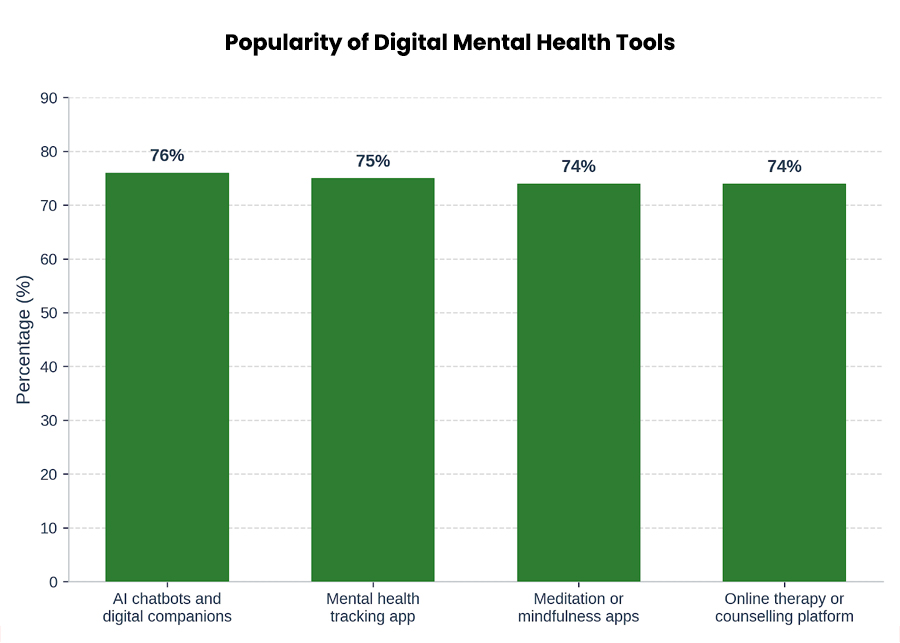
Artificial intelligence (AI) adoption is growing in the area of mental wellness, though consumers expressed lower confidence and trust with their experiences. Only 60% rated its influence as positive (for mental wellness), compared to 65% for both financial and physical wellness. The digital tools Singapore residents have found helpful in supporting their mental wellness are shown in the figure below
The use of AI for mental wellness has brought about mixed feelings for respondents. In general, concerns about AI hindering usage of digital tools for mental wellness include:
Consequently, approximately 51% of respondents sometimes feel stressed or anxious when using digital mental health tools; this is counterintuitive to the purpose of the tools.
The data point to these potential behaviours in the coming year:
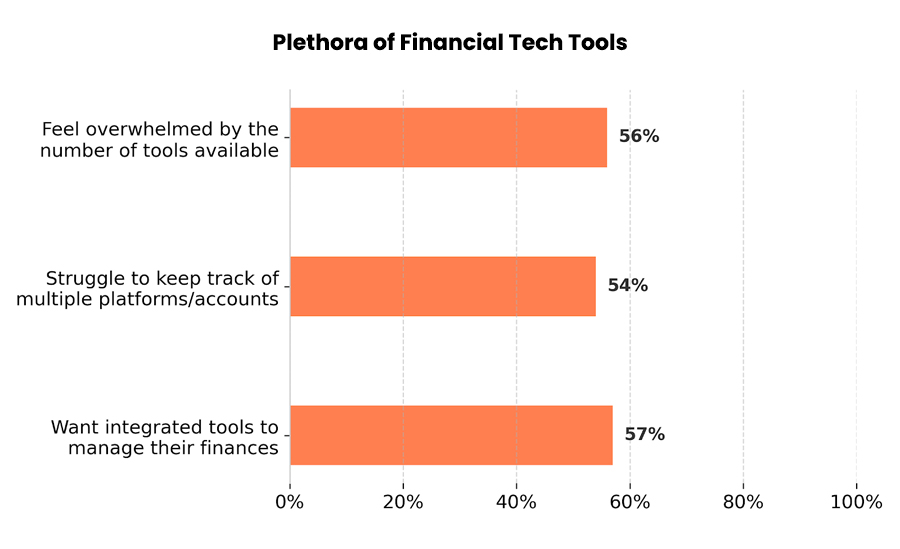
The plethora of financial technology solutions has induced strain for Singapore residents seeking financial wellness. While they continue to adopt such tools, respondents are reportedly feeling overwhelmed by the number of financial tools available. They also struggle to remain on top of multiple platforms and accounts. This has led to increasing demand for integrated tools to manage their finances.
The findings show there is still a desire for expert reassurance, with three in 10 (31%) indicating that a human adviser or agent support would boost their confidence in managing finances digitally.
Digital tools like Strava, Apple Watches and Fitbit are commonly used to track fitness progress, with approximately seven in 10 (69%) feeling more in control of their physical health through them. Yet, this data-driven motivation has led to stress for many.
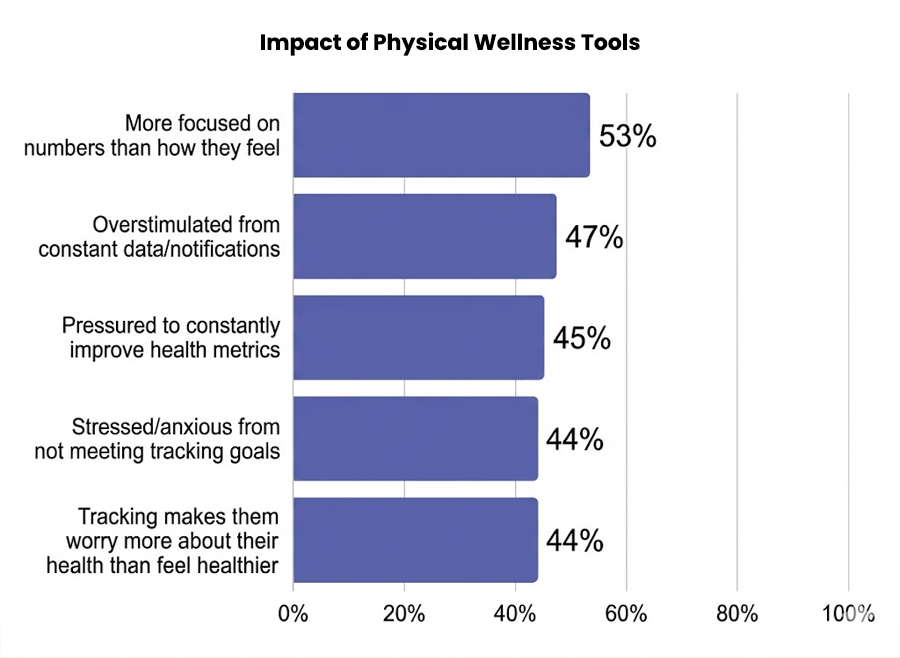
The findings highlight a need for more personalised physical health programmes and initiatives.
On a positive note, technology tools have shown the strongest positive impact in supporting social wellness.
The majority of Singapore residents (70%) reported feeling more socially connected with the help of digital tools. However, the depth of these connections remains questionable, given that nearly half of respondents (46%) feel socially isolated even when digitally connected.
As people move forward to better navigate their holistic wellness, this study has uncovered a critical need for more integrated, intuitive, and human-centric digital solutions to support the journey.
1 Data for all graphs are taken from the study.