TAKEAWAYS
When you hear someone introduce himself (or herself) as an entrepreneur, your inner monologue may be inundated with oohs and aahs. Yes, it sounds amazing and impressive but, success does not fall from the sky. Behind the scenes, a tremendous amount of effort and plentiful resources have to be invested into the undertaking.
Entrepreneurship is a long and arduous journey fraught with challenges. Unstable cash flows, overwhelming workload, inability to get the right hires and intense market competition are just the tip of the iceberg. Statistically, the chances of becoming a successful entrepreneur are very low, given that the failure rate for startups is as high as 90%. Yet, the harsh realities have not deterred people from treading this path. Lancaster Lee, Managing Director of One Tax CM, is one of them.
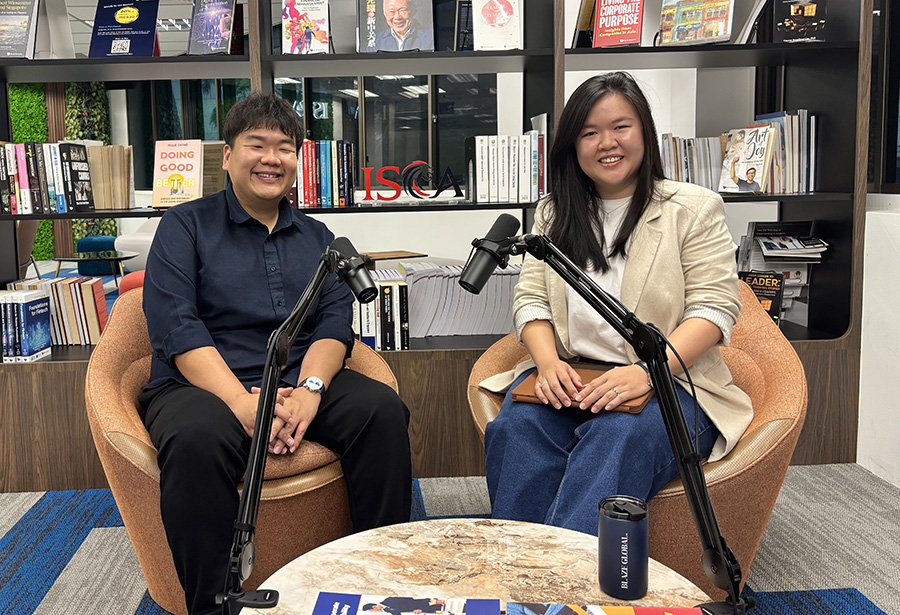
Most people do not suddenly wake up one morning and decide that they want to become an entrepreneur. More often than not, there is an impetus or a cause.
For Mr Lee, this came gradually during his employment tenure with the Inland Revenue Authority of Singapore (IRAS). From the many walk-in enquiries received from small and medium-sized enterprises (SMEs) over the years, he surmised that this was a huge underserved market with plenty of opportunities. “They really had no idea what was going on. They did not know how to comply with the tax requirements,” he recounts.
Coupled with the recognition that he was reaching a crossroad in his career, Mr Lee realised that he might need to venture out on his own. With the skills and knowledge acquired at IRAS, he was confident that he was well equipped to provide tax services, and that helped him take the plunge to start his own business.
One might think that prior to jumping into the deep end, a substantial amount of preparatory work had to have been done. That cannot be further from the truth. The fact is, many business founders tend to rush to set up their own business, driven by passion or enthusiasm. The problem is, they fail to give due deliberation to critical aspects such as finance, manpower, logistics and market research.
Mr Lee acknowledges that he did not have any business plan then, when he left IRAS to strike out on his own. That said, he does not believe it to be a fatal flaw. “There is only so much that we can prepare. Sometimes you just have to plan 25%, execute it and then refine your next steps along the way,” he explains.
Many new business owners are so focused on setting up their business that they relegate key areas, such as accounting, tax and recordkeeping, to the backburner. Not only are these areas grossly neglected, some business owners do not even know the basic requirements. Consequently, they make fundamental mistakes.
According to Mr Lee, the most common misconception among business owners is that certain “business-related” expenses are tax-deductible, such as, the car they frequently use in the course of running the business. Little do they know that in Singapore, expenses for private cars (like fuel costs and parking charges) are generally not tax-deductible, even if used for business trips. IRAS treats these as non-deductible private expenses.
To elevate the gravity of business owners’ knowledge gap, Mr Lee recounts an instance where a business owner operated without a corporate bank account. The business owner had used his personal savings account to conduct his business! Sounds unbelievable? It really happened, confirms Mr Lee.
Hence, business owners need to recognise that businesses are highly regulated in Singapore, even sole proprietorships and partnerships. They must be aware of their responsibilities as business owners, including statutory and compliance responsibilities, to avoid falling foul of the law. They should be aware of the impact of getting these things wrong, because the resulting damage could be a lot higher than they have ever imagined.

The knowledge gap can certainly be narrowed with professional assistance. In Mr Lee’s view, however, business owners in Singapore are not setting aside enough resources to engage the right accountants, tax agents and other professional service providers to adequately support them.
Drawing from his personal experiences, he shares that foreign clients are generally more receptive to paying a premium for higher quality services. This differs from local SME clients, who typically put price as the key overriding factor, appointing the service provider giving the lowest quote.
“They need to rethink whether price is the only thing that is important to them, or do they also need to take into account the competency of the service provider,” he points out.
For startups, Mr Lee reckons that the start of the second year of operations will be a good time to engage competent professional service providers. After being in business for one year, the business owners will know whether the business will be viable going forward. If they envisage a positive outlook, it will be timely to review whether the incumbent service providers are well placed to continue their roles or whether alternatives need to be sourced.
While entrepreneurship may not be everyone’s cup of tea, if one possesses an adventurous spirit and has fire in the belly, it is never too old (or young) to be one’s own boss when the opportunity arises. Where necessary, business owners should seek competent professional support to help them – it will be worth the while.