TAKEAWAYS
A new year, a clean slate. As we welcome 2026, we invited the alumni of ISCA’s Global Talent Programme (GTP) 2025 to share their thoughts about the accounting industry and profession, and what they think the future holds for them. We also asked our ISCA members about their outlook for 2026, as well as their views and wishlist for Budget 2026, which will be delivered on February 12.
As you prepare to enter the workforce, what changes, opportunities, or developments do you hope to see in the accounting industry and in the job roles available to future professionals?
As I prepare to enter the workforce, I hope to see the accounting profession continue its evolution from a compliance-focused function to a more strategic, value-driven role. With rapid advances in automation, AI, and data analytics, routine accounting and audit tasks are increasingly being streamlined. This presents a strong opportunity for future professionals like us to focus on higher-order work such as financial analysis, risk assessment, strategic advisory, and decision support.
In addition, I expect carbon accounting, ESG reporting, and climate-related financial disclosures to become core areas of the profession. As environmental sustainability and energy transition increasingly influence corporate strategy, investment decisions, and regulatory frameworks, accountants will play a critical role in measuring, recording, and verifying carbon emissions, carbon credits, and sustainability metrics. Beyond compliance, professionals will be required to assess environmental risks, evaluate the financial impact of decarbonisation strategies, and advise management on achieving lower carbon footprints while maintaining longterm value creation. This shift positions accountants as key contributors in aligning business performance with environmental responsibility and global climate goals.
Overall, I see 2026 and beyond as a period of meaningful transformation for the profession, one that offers diverse career paths, global opportunities, and the chance for accountants to act as trusted advisors in an increasingly dynamic business environment.

First, I hope that the accounting industry will adopt AI more widely to enhance work efficiency. For example, with the support of digital tools, accounting consultants would be able to provide more timely financial reports, allowing management to gain faster insights into business performance. As traditional tasks such as journal entry are gradually replaced by technology, the role of accountants should evolve from simple bean-counters to decision-makers.
Second, I hope accountants will not only interact with data but also increasingly engage with people. In organisational management, every stage of the PDCA (plan, do, check, act) cycle relies on data analysis and financial support provided by accountants. However, data itself does not automatically create value. What truly matters is the ability to translate professional accounting information into a communication language that managers and other departments can understand and apply. Therefore, accountants are expected to have strong cross-functional communication skills which enable them to collaborate effectively with individuals from different backgrounds.
Third, I hope accountants can uncover deeper insights from numbers rather than stopping at surface-level results. Drawing on my current studies in accounting with a focus on the healthcare sector, economic evaluation typically involves two key approaches: cost-effectiveness analysis, which examines whether a treatment improves a patient’s health condition, and cost-utility analysis, which goes further by assessing whether patients can regain a quality of life comparable to that before illness. Compared with single-outcome measures, the latter places greater emphasis on longterm human well-being.
Similarly, in accounting practice, financial performance is often assessed by reading annual reports and examining profitability ratios over the past years. While these analyses are important, I hope accountants will also pay closer attention to factors beyond the numbers. For instance, a company’s profits may continue to grow, yet high-pressure working environments could lead to increasing employee turnover. Alternatively, rising costs may be accompanied by stronger performance in sustainability initiatives, enhancing the firm’s social recognition. Although such factors are difficult to fully capture through traditional financial indicators, they play a crucial role in shaping an organisation’s long-term development.

When I enter the workforce, I dream of an AI companion for accountants and auditors that feels as natural as Excel 爱 and PPT: no coding, no steep learning curve – just an open, universal canvas that lets me drag, drop, and design my own workflows. Instead of hopping among a dozen subscription tabs, I could plan risk assessments, test journal-entry anomalies, and visualise cash-flow forecasts inside one persistent workspace that remembers my professional context. Also, I hope such a tool is one that all professionals can use and interact with.
Critically, this vision keeps the human at the centre. Hiring managers would stop hunting for “accountant-programmers” and start measuring AI Q – alongside IQ and EQ – Can she frame the right prompt? Can he spot when the model’s confidence is misplaced? Training budgets would pivot from teaching Python to teaching scepticism, ethics, and domain judgement.
I firmly believe that professional accounting and auditing work still should be completed by professional personnel. However, auditors can spend less time ticking boxes and more time asking new questions, like, “How do we validate smart-contract populations across decentralised exchanges?”
AI or technology should be used to assist and amplify, not replace the professional sceptic. Who knows which risks still require a human handshake, a site visit, or a gut feeling that no algorithm can quantify?
Many people perceive accounting as being solely about numbers but, in practice, a chartered accountant’s role requires critical thinking, strategic decision-making, and a forward-looking perspective. The profession is shifting from simply applying technical knowledge to understanding how that knowledge impacts real-world business outcomes.
I hope to see the industry further embrace critical thinking in both training and the workplace, with practical workshops and opportunities to solve real problems. Accountants increasingly need to understand the industries they serve, whether mining, agriculture, or technology, to provide insights that go beyond financial reporting.
Being able to anticipate and manage risks effectively requires an open mind and a holistic view of business operations. As accountants, we are not just number-crunchers. We are problem-solvers and advisors capable of stepping into roles such as CFOs and CEOs where broad business knowledge is essential. I would like future developments in the profession to focus on equipping chartered accountants with the tools and mindset to think strategically, stay informed on current affairs, and make decisions that meaningfully impact organisations. This will ensure accounting continues to evolve as a dynamic, value-adding profession.
2026 business outlook (Singapore): Cautious optimism. After 2025’s strong rebound, Singapore’s growth is expected to moderate. Key sectors – high-tech manufacturing and finance – should continue to expand, but overall momentum will be tempered by global headwinds such as trade tensions and softer external demand. In short, 2026 will likely bring steady, modest growth rather than another surge.
Accountancy profession/ISCA in 2026: Embracing tech and sustainability. A development to highlight is the profession’s digital and ESG transformation. Accountants are upskilling in AI and data analytics, and gearing up for new sustainability reporting standards. I hope to see our professionals fully embrace these changes, leveraging automation and analytics to boost efficiency, and stepping into advisory roles (for example, carbon accounting) that go beyond traditional finance.
Singapore Budget 2026 wishlist – AI adoption: Accelerating an AI-driven future. I’d like to see bold support for AI in this Budget. This could include incentives (grants, tax breaks) to help businesses, especially SMEs, adopt AI solutions, big investments in AI talent development and digital infrastructure, and initiatives to position Singapore as a trusted AI innovation hub. These moves would spur productivity and keep our economy and workforce at the forefront of the AI era.
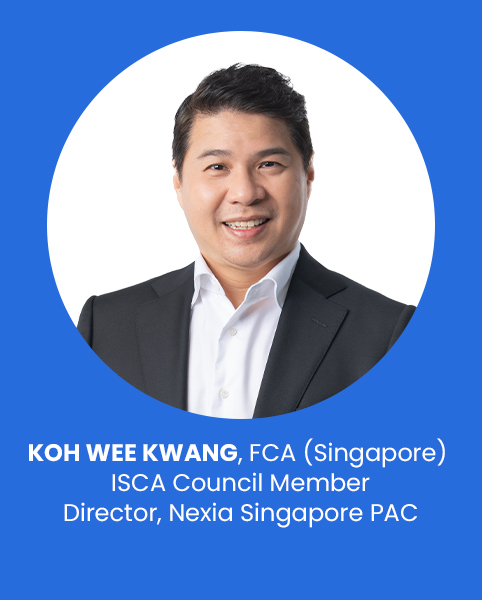
Despite Singapore’s robust full-year GDP growth of 4.8% in 2025, sentiment on the ground remains subdued. On 11 December 2025, The Business Times had reported that more than 3,000 F&B closures were recorded in 2024, with 60% of the restaurants that closed between January and October 2025 being less than five years old. A CNA straw poll of over 100 recent graduates, conducted in August 2025, found that intense competition from peers was their top concern, followed by limited job openings and low starting salaries. A survey has shown that the unemployment rate among those below 30 years old rose from 5.4% in March 2025 to 5.7% in June 2025.
In the short term (over the next one to two years), this sluggish sentiment is likely to weigh on small and medium-sized practices (SMPs), particularly those serving smaller SMEs. Over the longer term, the accountancy profession will be significantly affected by the advancement of AI. Accountants must be urgently reskilled, and SMPs need to recognise that it is no longer business as usual. They must rethink how to ride the AI wave, including carefully assessing the funding and resources required to integrate AI into their business models.
SMPs therefore need to accelerate their transformation efforts. ISCA can play a critical role by providing platforms that enable collaboration among SMPs. At the same time, the government, including regulators, should provide stronger support to SMEs, including SMPs, to help them thrive. SMEs, which employ about 60% of Singapore’s workforce, remain a core pillar of the Singapore economy.
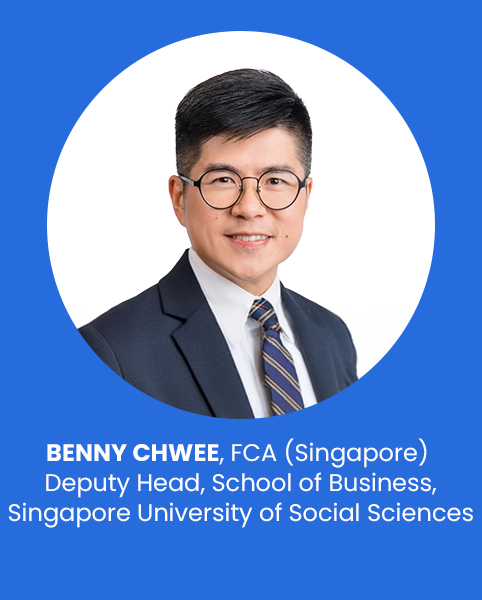
When you look ahead to 2026, what do you most hope to see for the accounting profession and industry?
In 2025, The Business Times reported that chartered accountants are “the second-most trusted profession in Singapore, just behind doctors … Globally, the profession ranked third in trust … behind doctors and engineers”.
In 2026, I encourage fellow accountants to build on this trust by bringing the “sexy” back to the profession, metamorphosing from bean-counters into strategic thinkers. This means moving beyond passive historical reporting to active business partnering.
Trust gives the profession credibility, while strategic insight gives it relevance. Together, they can redefine how accountants contribute to businesses and society in Singapore and beyond.
Looking ahead to Singapore Budget 2026, what policies or initiatives would most benefit the accounting profession and industry?
To reinforce trust and professional standards, Singapore Budget 2026 could consider introducing enhanced deductions for businesses that engage or employ chartered accountants and accredited tax professionals registered with the relevant bodies.
Enhanced deductions on certain qualifying expenses, subject to a cap, reduce taxable income, and in turn, reduce tax payable. This would encourage businesses, especially the small and medium-sized enterprises (SMEs), to invest in qualified professionals.
Qualified professionals, who are capable of providing sound judgement, strong governance and strategic advice beyond basic compliance would also benefit from enhanced professional standing in today’s business environment.
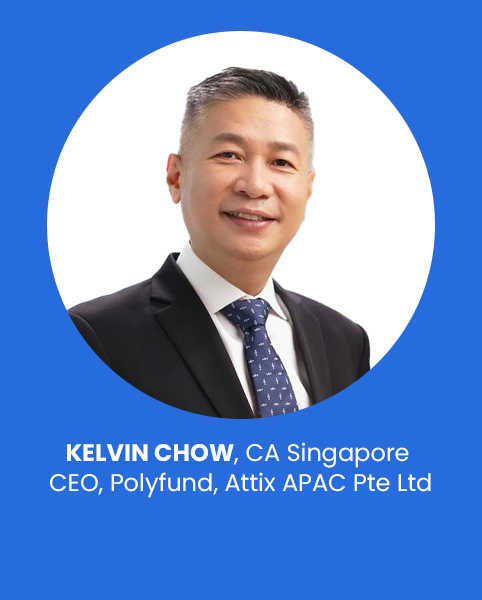
2026 business outlook (Singapore): The world is full of uncertainties largely due to US policies/actions. Of course, there will be a few sectors that will be expecting to do well, and AI is one of those sectors. I am in the AI industry, and I believe that the business outlook for 2026 will be favourable for my industry as we will provide breakthrough strategies to some of the businesses.
Accountancy profession/ISCA in 2026: The accountancy profession should understand the potential of AI and embrace change to improve business efficiency.