TAKEAWAYS
The ISCA Pre-Budget Roundtable (PBRT), which is held annually in the lead-up to Singapore’s Budget, provides a platform for business, industry and professional leaders to exchange perspectives on economic trends, enterprise realities and national priorities. The 2026 edition took place ahead of the Budget announcement on February 12, offering a timely forum to surface ground insights from the business community and contribute to policy dialogue.
As Singapore approached Budget 2026, the operating environment had become more complex and uncertain. Economic signals were mixed, geopolitical risks were evolving, technological disruptions were accelerating, and sustainability pressures were reshaping cost structures and investment decisions. Against this backdrop, PBRT 2026 convened at a critical juncture, not only to assess near-term conditions, but to explore how Singapore can strengthen resilience, drive innovation and sustain inclusive growth in a more volatile global landscape.
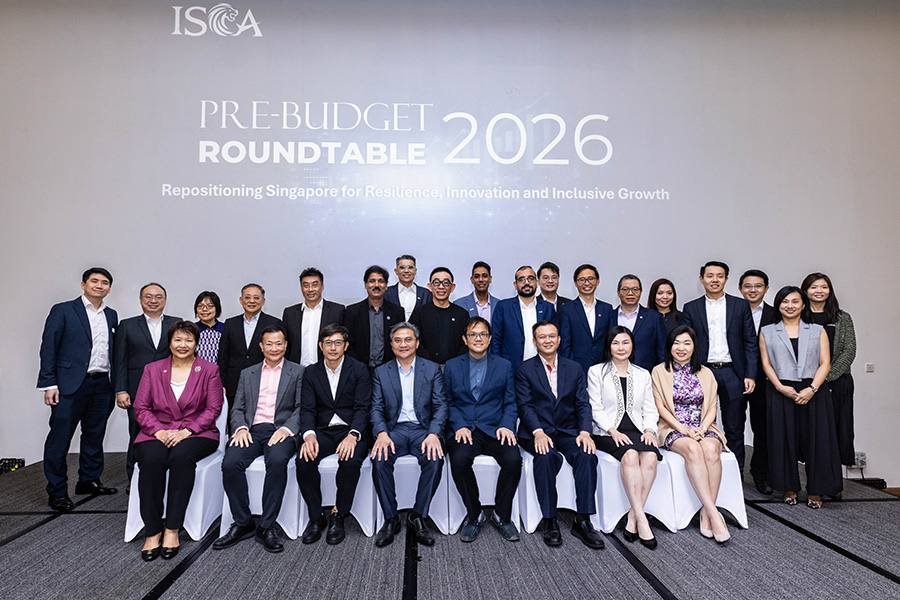
Held at YWCA Fort Canning on the morning of February 6, PBRT 2026 brought together leaders across business, finance, professional services, technology, media and policy ecosystems to examine Singapore’s outlook through a multidimensional lens.
The dialogue centred on interconnected drivers of long-term competitiveness, comprising economic resilience, enterprise competitiveness, internationalisation, artificial intelligence (AI) and workforce transformation, sustainability, small and medium-sized enterprise (SME) support, and fiscal strategy. These themes were informed by ISCA’s broader policy engagements, including the Pre-Budget Survey, practitioner focus groups and industry dialogues, which consistently highlighted four signals – persistent uncertainty, optimism around AI and the green transition alongside readiness gaps, strong interest in internationalisation but limited coordination, and continued cost and talent pressures.
PBRT 2026 aimed to translate these realities into practical, forward-looking discussion, balancing immediate business concerns with long-term transformation priorities.
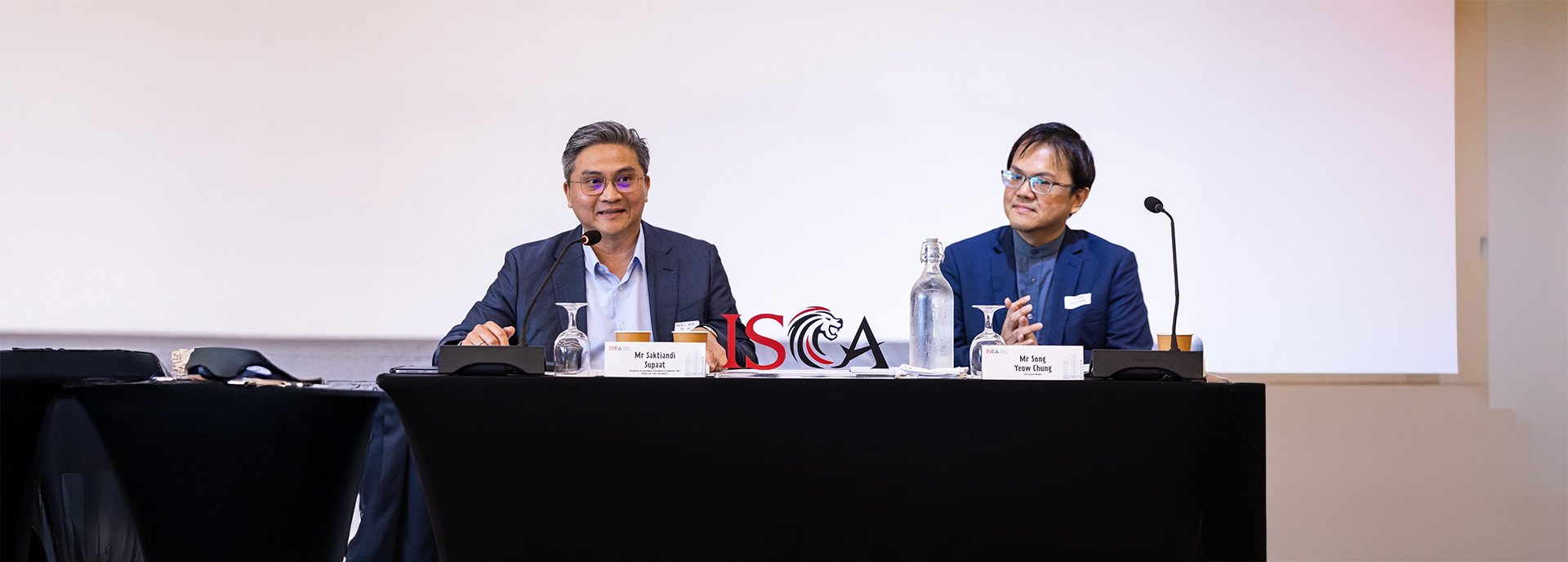
The Roundtable was co-chaired by Mr Saktiandi Supaat, Chairperson of the Government Parliamentary Committee for Finance, and Trade and Industry, and Mr Song Yeow Chung, ISCA Council Member, reflecting the integration of policy and professional perspectives.
The panellists represented a broad cross-section of Singapore’s enterprise ecosystem including:
In total, over 300 participants joined PBRT 2026 onsite and online. This diversity ensured that discussions were grounded in enterprise realities while incorporating perspectives on AI transformation, workforce readiness, capital markets and investor considerations, sustainability, and professional services insights across different sectors.
Internationalisation and sector collaboration
A key theme was the importance of Singapore companies going to market as integrated ecosystems rather than siloed players – a “pack hunting” approach signalling coordinated national capability. Participants discussed opportunities across three broad spheres of influence, namely, the US, China and ASEAN, alongside emerging potential from the Johor-Singapore Special Economic Zone. The dialogue also highlighted the role of data sharing, ecosystem coordination and digital capability in helping SMEs internationalise more effectively.
Cost pressures and workforce challenges
The discussion recognised the realities of a “two-speed economy”, where different enterprise segments require differentiated support. Participants emphasised that policy responses should go beyond short-term relief to address structural challenges, including more nuanced approaches to SME classification, workforce capability and productivity.
AI transformation and workforce readiness
The Roundtable moved beyond generic digitalisation narratives to focus on leadership capability, recognising that effective transformation must start at the top. Discussions emphasised role-specific AI education, scaling practitioner pathways, and addressing the high cost of AI infrastructure through shared platforms and ecosystem support. The need to support small and micro enterprises in AI adoption was also highlighted, given their importance to job creation.
Sustainability and enterprise transition
Participants discussed how green transition can be reframed as a source of market opportunity rather than compliance burden, through practical, value-driven approaches that enable SMEs to participate meaningfully in sustainability transformation.
Workforce renewal and long-term resilience
The dialogue also explored ways to future-proof the workforce, including more flexible work arrangements for an ageing workforce, stronger senior employment practices, productivity-linked incentives, and pathways for overseas exposure, reinforcing long-term competitiveness and social cohesion.
Several themes raised at PBRT 2026 were reflected in Budget 2026. Continued investments in AI, digitalisation and workforce development aligned with calls to strengthen leadership capability and role-specific upskilling. Measures supporting enterprise transformation and internationalisation echoed discussions on coordinated ecosystem approaches and regional growth. Ongoing support for sustainability and the green transition reflected the emphasis on enabling businesses, especially SMEs, to participate meaningfully. At the same time, targeted assistance to manage cost pressures and support workforce resilience resonated with concerns raised by enterprises during the Roundtable.
While policy and business perspectives may differ in emphasis, the alignment across key priorities underscores a shared focus on strengthening Singapore’s long-term resilience and competitiveness.
PBRT 2026 is ultimately about repositioning, not reacting. It reflects the recognition that Singapore’s future competitiveness will depend not on incremental adjustments, but on sustained investments in leadership capability, workforce transformation, innovation ecosystems, institutional resilience and international connectivity.
As Singapore moves forward from Budget 2026, the challenge is not only to manage near-term pressures, but to build durable foundations for growth in a world shaped by volatility, fragmentation and rapid technological change.