


TAKEAWAYS
As part of an exciting industry engagement project, our team had the opportunity to dive deep into a real-world problem statement posed by Grab, Southeast Asia’s leading super-app. The problem statement revolved around one of the most complex and fast-evolving frontiers in mobility – autonomous vehicles (AVs).
Our task was to analyse Grab’s potential entry into the autonomous driving space and propose a strategy that balances opportunity with risk. From market environment analysis to strategy selection and implementation blueprints, we had the opportunity to approach the case not as students but as industry strategists.
We began by framing the macro situation of the global autonomous vehicle industry. From there, we zoomed in on Singapore’s unique context as a city-state known for its supportive regulatory framework and advanced urban infrastructure, making it a promising launchpad for AV deployment.
We asserted that AVs weren’t just a technological opportunity for Grab, they were a strategic imperative. With its strengths in mobility, a strong brand presence, and Singapore’s ecosystem advantages, Grab is well-positioned to close in on global AV trends and capture early market share in the region.
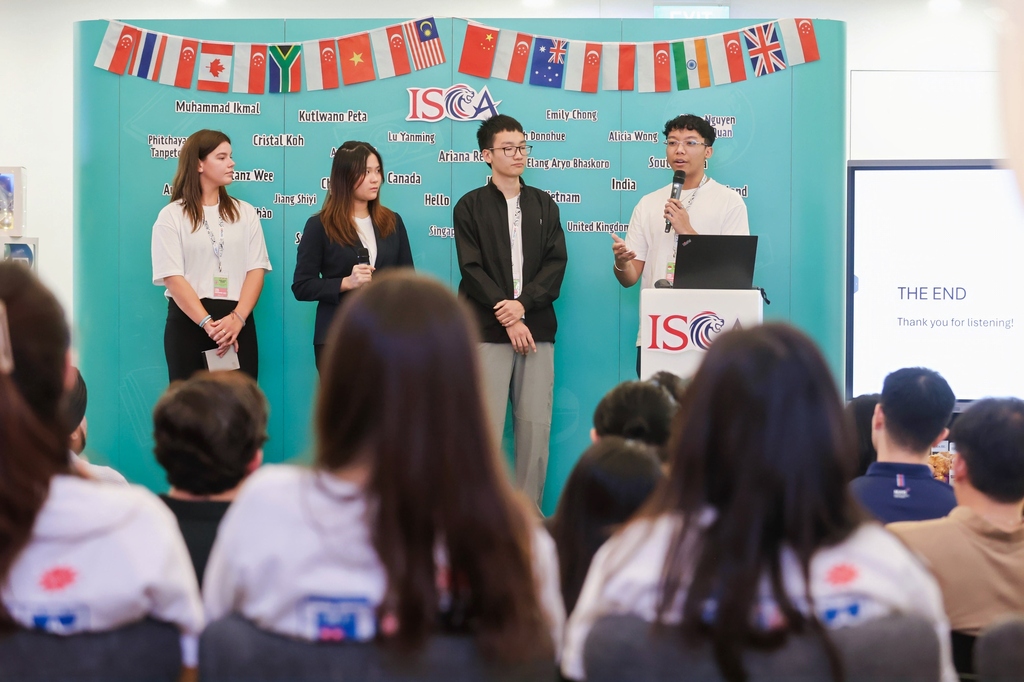
What made this case truly enriching was its complexity. There were no straightforward answers. We had to think like strategists – weighing trade-offs, anticipating risks, and recognising that a one-size-fits-all model would not work in a region as diverse as Southeast Asia.
For instance, while Singapore may be ready for AVs, other cities in the region face distinct challenges from a lack of regulatory readiness to infrastructure gaps and a dearth of consumer trust. Our recommendations had to reflect that diversity and yet remain adaptable across different markets.
Working across cultures also added a valuable layer to our experience. Our team comprised members from four different countries, each bringing unique perspectives and approaches to market analysis, risk assessment, and solution design. Instead of seeing our differences as obstacles, we embraced them as a strength. This diversity led to richer insights and a more well-rounded solution.
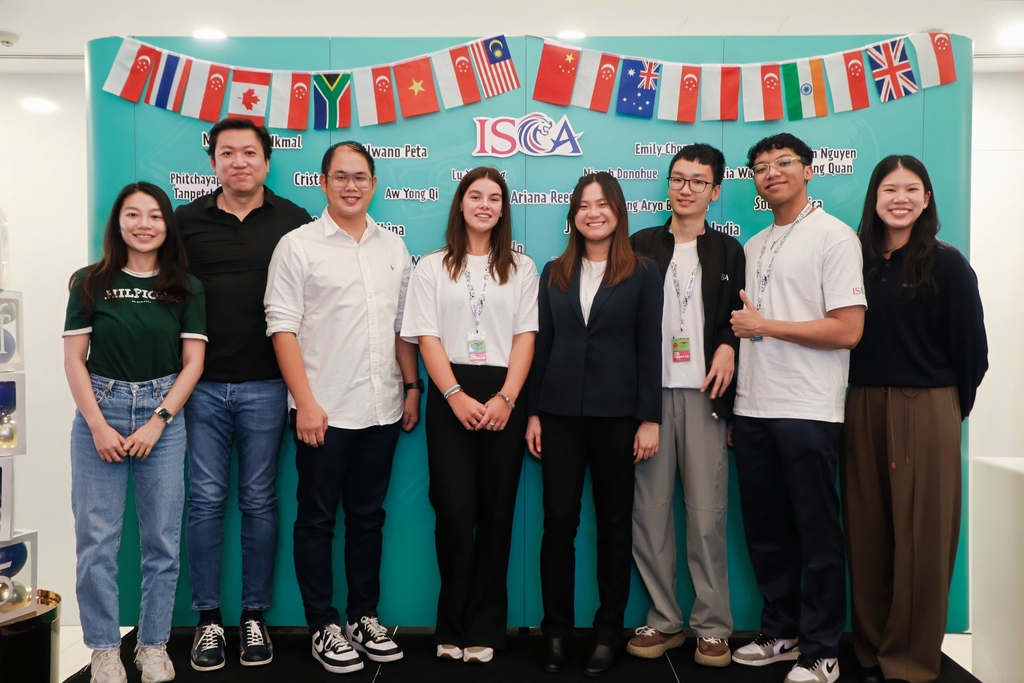
One of the turning points in our learning journey was the visit to Grab’s headquarters. We arrived loaded with a list of questions, and left with even more inspiration. The Grab team generously shared its thinking around AV deployment, operational challenges, and long-term vision. These insights sparked new lines of inquiry, particularly around driver shortages and urban mobility optimisation.
The dinner with our mentors from Grab provided a personal dimension to our experience. Their candid feedback helped sharpen our ideas and gave us the confidence to refine our recommendations further.
Despite facing challenges such as working across time zones – we were all based in different countries, namely, the UK, China, Indonesia and Singapore – they actually served to strengthen our teamwork. When we finally met each other during the GTP Singapore week, the in-person encounter brought a new level of urgency that heightened the cohesion of the team. Our team members were in agreement when we said, our biggest challenge wasn’t coming up with ideas and recommendations, it was fitting them all into a 10-minute presentation!
Working on the Grab problem statement taught us more than strategy; it challenged us to think deeply about real-world business decisions, collaborate across cultures, and combine human-centred thinking with rigorous market analysis. We learnt that strategy is not static; instead, it is constantly evolving, responsive, and built on collaboration.
Above all, we discovered that innovation thrives when diverse minds come together around a shared goal. This project has deepened our understanding of the AV industry and also left us with lasting lessons in teamwork, adaptability, and strategic thinking.
We’re grateful for the opportunity to work on this problem statement with Grab and ISCA, and we look forward to seeing how Grab continues to shape the future of mobility in Southeast Asia.
In the next article, read about how the team designed for DBS a financially empowering solution that creates sustainable business value, while improving the lives of older adults in Singapore.
Have you read Parts 1, 2, 3 and 4 of this article? They are all here on CA Lab.
Cristal Koh is in Year 2, Business Administration and Finance, National University of Singapore, Singapore; Niamh Donohue is in Year 1, Accountancy, University of Aberdeen, Scotland; and Yanming Lu is in Year 2, Accountancy, Sun Yat-sen University, China.