Reimagining Enterprise Strategy In A Multipolar Economy
11 Nov 2025
“Going to market as Team Singapore” was a recurring theme at the recent Joint Forum on Reimagining Enterprise Strategy, an event supported by the Professional Service (PS) Centre Alliance Partners comprising ISCA, Association of Small & Medium Enterprises (ASME), Tax Academy of Singapore, and the Law Society of Singapore.
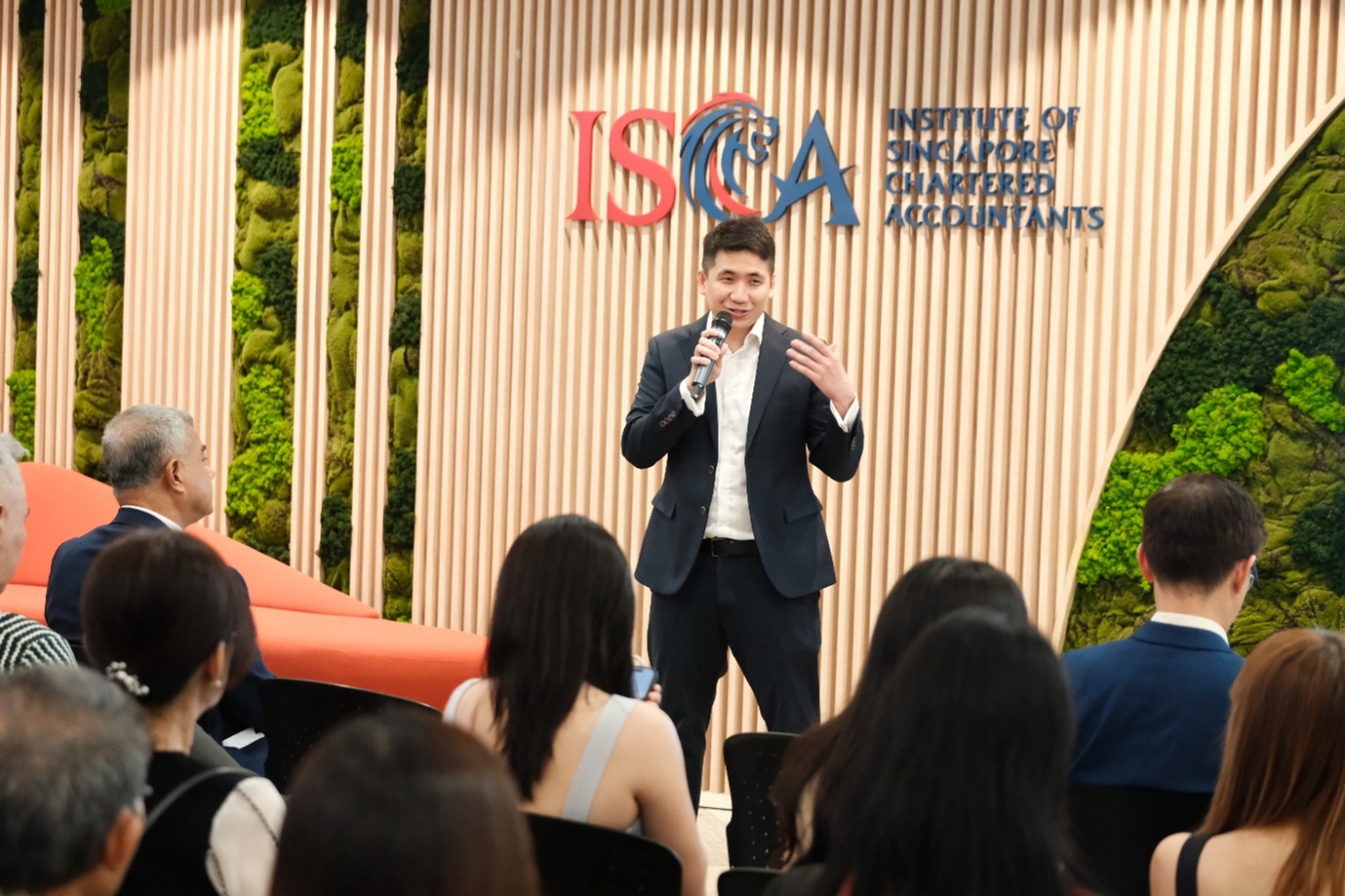
The Joint Forum brought together leaders from across Singapore’s enterprise ecosystem for a powerful exchange of ideas and perspectives. It opened with a welcome address by Mr Terence Lam, Director of Advocacy & Professional Standards at ISCA, who shared that the Forum was one of many efforts by the PS Centre to strengthen enterprise capabilities through strategic partnership and collaboration.
Mr Terence Lam, Director of Advocacy & Professional Standards, ISCA, shared that the Forum was one of many efforts by the PS Centre to strengthen enterprise capabilities
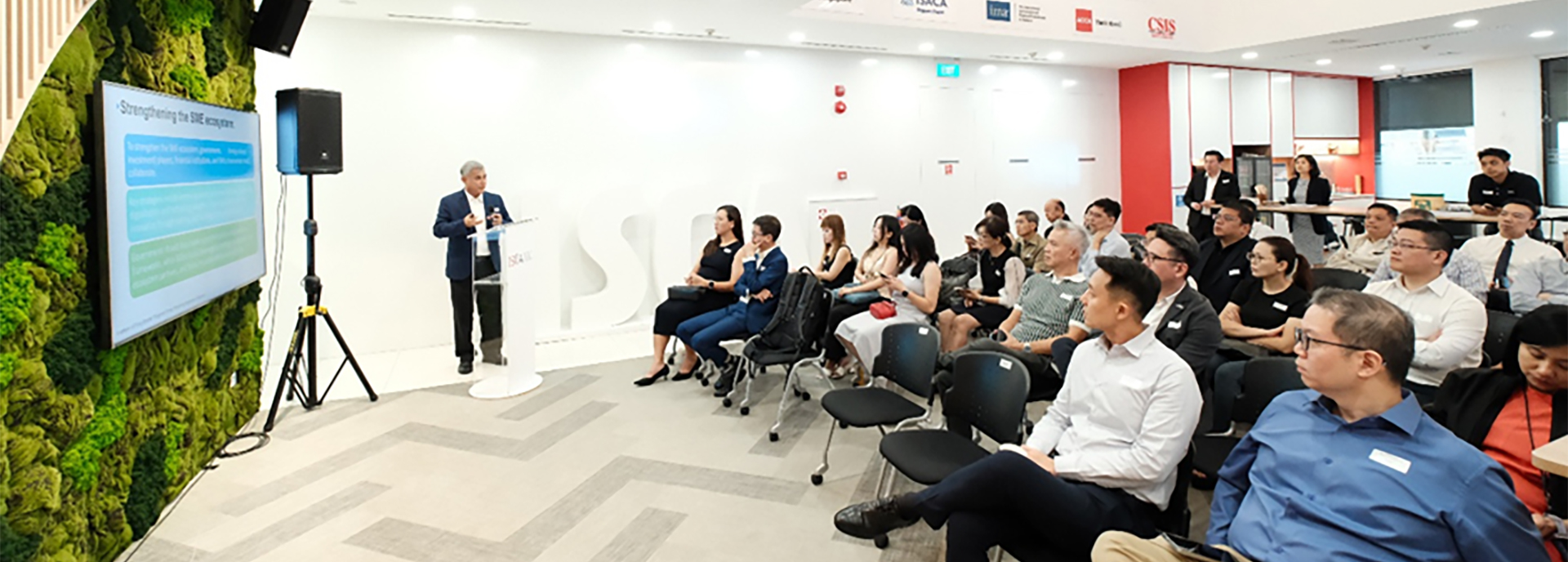
Four speakers helmed a morning of robust discussions, with insights and perspectives from macro policy and professional services. Dr Faizal bin Yahya, Senior Research Fellow at the Institute of Policy Studies, shared his views on empowering Singapore enterprises to be agile and seize opportunities in a multipolar economy. He called for a rethinking of Singapore’s playbook – spanning areas such as internationalisation through strategic partnerships and go-to-market strategies informed by deep market intelligence, strengthening the SME ecosystem to drive innovation and technology adoption, and prioritising workforce development, business resilience, and sustainability.
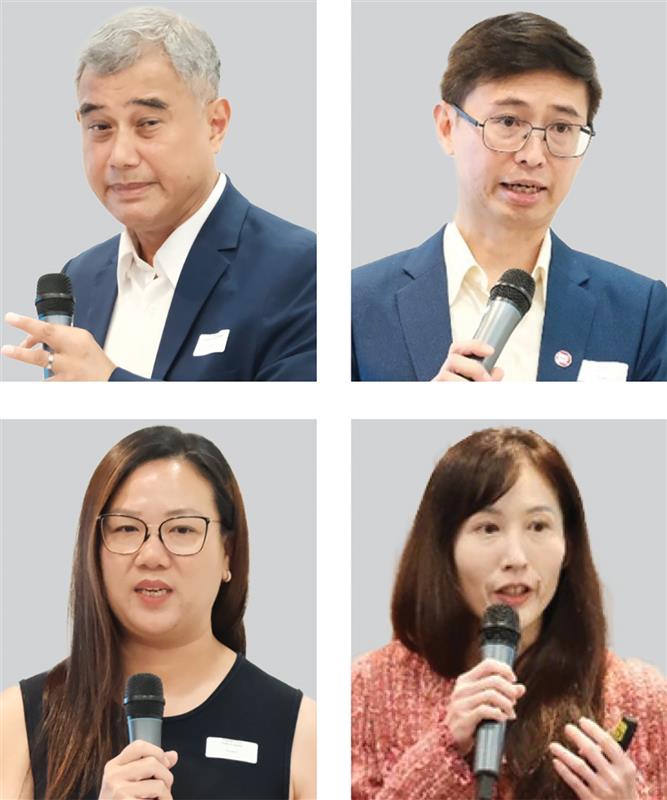
Helming the discussion were (clockwise from top left): Dr Faizal bin Yahya, Senior Research Fellow, Institute of Policy Studies; Mr Ang Yuit, President, ASME; Ms Irene Tai, Corporate Tax Advisor, PwC; and Ms Ong Ken Loon, Board member, Tax Academy of Singapore and Head of Tax and Private Client Services, Drew & Napier
Mr Ang Yuit, President of ASME, shared candid insights from the ground about the business realities faced by SMEs. Both Ms Irene Tai, Corporate Tax Advisor at PwC, and Ms Ong Ken Loon, Board member of Tax Academy of Singapore and Head of Tax and Private Client Services at Drew & Napier, offered perspectives through the professional services lens. They highlighted corporate challenges as well as opportunities that can be unlocked through technology, strategic tax planning, and leveraging professional services to navigate complex regulatory environments and access government support and grants.
Following the sharing sessions, the participants were organised into smaller discussion groups, moderated by Mr Song Yeow Chung, Council member of ISCA and CFO of Old Chang Kee, and Mr Darren Tan, Deputy Executive Director of ASME. The groups discussed the following topics:
What bold shifts must Singapore undertake as the global economic order fragments?
How should Singapore enterprises reshape their growth strategies across major hubs in a multipolar economy?
What are the most pressing cost pressures (for example, rental, manpower, compliance) facing your enterprise today? How are you responding?
How can professional services help Singapore enterprises navigate global challenges and seize cross-border opportunities?
How can Singapore enterprises compete effectively in global markets while building resilience, innovation, and sustainable growth, and what policy levers can support this?
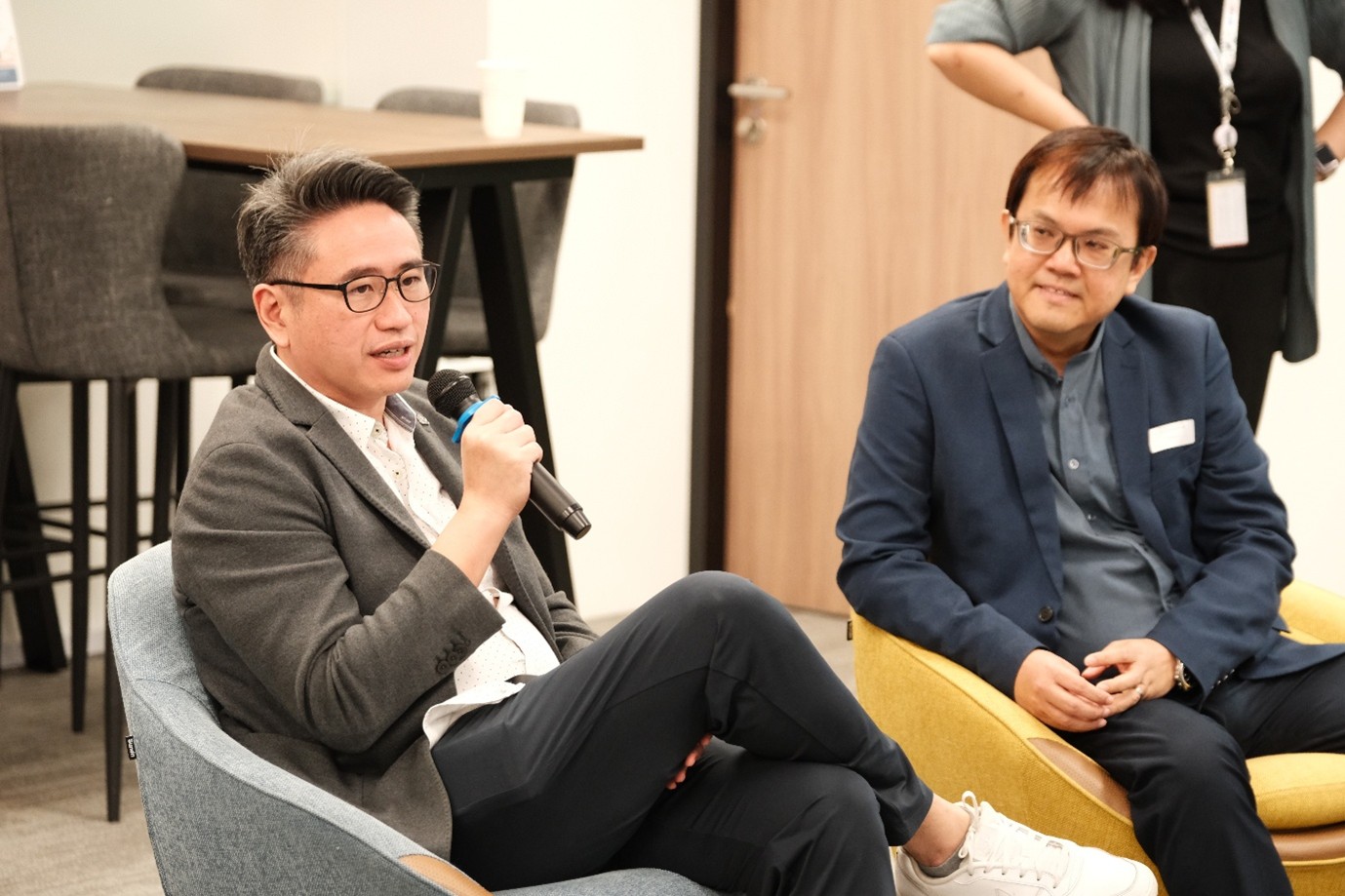
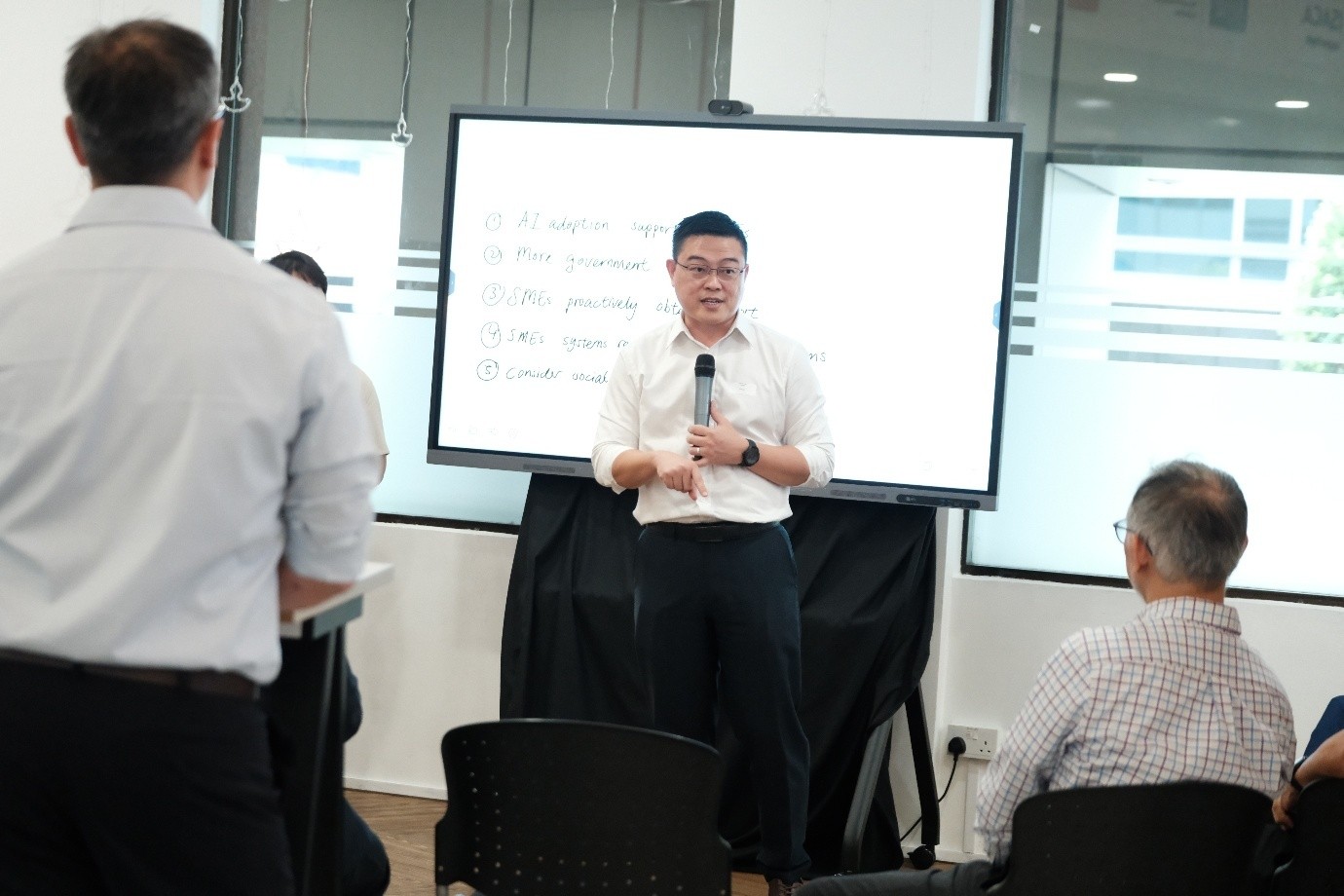
Leading a discussion group were (from left) Mr Song Yeow Chung, ISCA Council member and CFO of Old Chang Kee; and Mr Joshua Koh, President of SFIC (Singapore Furniture Industries Council) and CEO of Commune Lifestyle Pte LtdMr Darren Tan, Deputy Executive Director, ASME, led another discussion group
The Joint Forum served as a timely and impactful platform for dialogue, collaboration, and forward-thinking. By convening voices from policy, enterprise, and professional services, the Forum underscored the importance of a unified approach – Team Singapore – in navigating the complexities of a multipolar economy. The diverse perspectives and rich discussions not only illuminated the challenges facing Singapore enterprises but also surfaced actionable strategies to build resilience, drive innovation, and unlock cross-border opportunities.
KEY INSIGHTS AND REFLECTIONS
Internationalisation and diversification: To reduce vulnerability from over-reliance on a single market, enterprises must diversify their markets and supply chains, even if it means forgoing the efficiencies of a centralised, scale-driven strategy.
Market intelligence and awareness: SMEs need better access to timely information on regulatory changes and global market opportunities. There is a growing demand for clearer guidance on how to enter emerging regions such as the Middle East, Africa, and South America. Enterprises are seeking insights into which jurisdictions offer competitive tax regimes, access to skilled talent, and strong partner ecosystems to support international growth.
Grant accessibility and navigation: While information on available grants is widely accessible, many SMEs voiced that navigation of these offerings could be challenging. The complexity of eligibility criteria, application processes, and overlapping schemes can be a barrier.
Developing globally exposed talent: In a multipolar economy where growth is increasingly driven by diverse regional hubs, Singapore enterprises must cultivate talent with deep market-specific knowledge and global agility. Supporting the deployment of talent in overseas markets enables businesses to build local networks and gain market-specific expertise. These globally exposed individuals become strategic assets, bringing back critical insights to strengthen Singapore’s enterprise capabilities.
Collaboration (“Hunt as a pack”): To compete more effectively in overseas markets, SMEs must move beyond internal competition and form coalitions or joint ventures. Larger corporates can play a pivotal role by bringing smaller enterprises into international pitches, creating shared value and scale.
Rising costs and business competitiveness: While Singapore’s reputation as a trusted, efficient, and talent-rich business hub remains strong, escalating costs – such as rental, manpower, and compliance – are putting pressure on SMEs and challenging the overall value proposition. There is a need for policy intervention to strike a balance between maintaining qualitative strengths and addressing quantitative cost pressures to keep Singapore attractive and competitive.
As the PS Centre continues to champion enterprise transformation through strategic partnerships and professional insights, the ideas and recommendations generated from this Forum will serve as valuable input for each Alliance Partner as they shape their own recommendations for Budget 2026 and beyond.
Send us an email to find out how you can be part of the PS Centre initiative and events.