
What if your next office comes with street food downstairs, a beach within walking distance, in a city you are excited to explore in your free time? Plus, it’s affordable, and your family considers it a never-ending vacation? For a growing number of professionals, this dream could well be the new work paradigm.
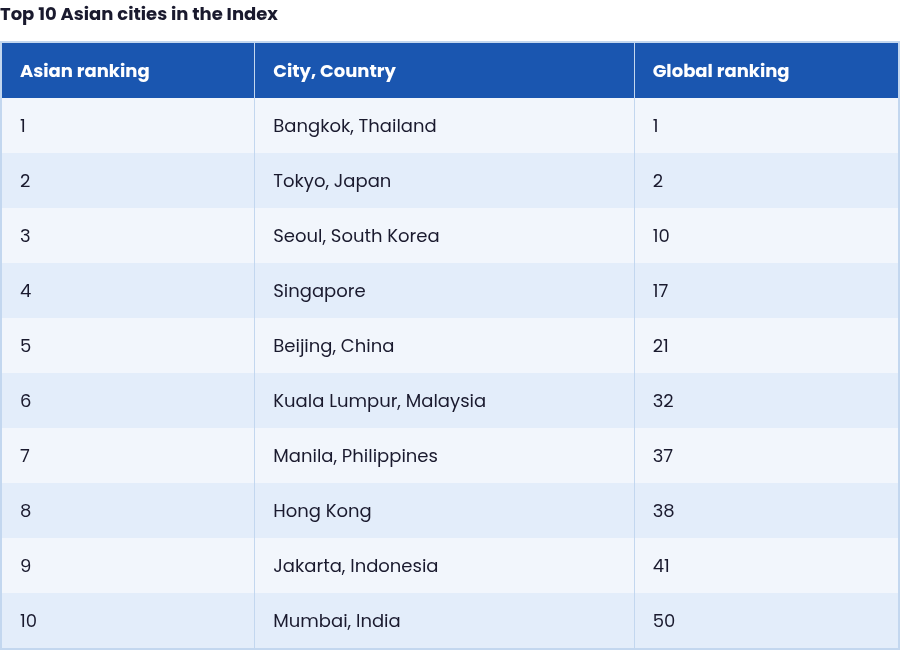
According to the Work from Anywhere Index 2026 by International Workplace Group (IWG), Bangkok (Thailand) is the top city for remote working, ahead of Tokyo (Japan) in second place, and Barcelona (Spain) in third. However, what stands out in the annual Index, now in its fourth edition, is that Asian cities are increasingly making their presence felt.
The latest Index shows Seoul (South Korea) in 10th place globally; Singapore, 17th; Beijing (China), 21st; and Kuala Lumpur (Malaysia), 32nd. This suggests a broader shift in what professionals value in a workplace. So, while in-office perks like a well-stocked pantry, fully equipped gym, meditation rooms and even nap pods are still coveted, what is in the office is not the only consideration; what is outside the office also matters.
The Index assesses the destinations based on a range of lifestyle and related factors spanning accommodation, availability of workspaces, broadband connectivity, climate, culture and entertainment, food, and transport, among others.
For remote workers, a good laptop and reliable WiFi are just the basics. Fast and reliable broadband, a dependable public transport system, and easy access to flexible workspaces make for a seamless workday. When the laptop closes and personal life begins, workers want to have a choice of good food, culture, entertainment, green spaces and opportunities to unwind. This combination is one reason Asian cities are moving up the ranks.
Tokyo, which ranks second this year and first in 2025, offers worldclass transport, excellent broadband, and an extraordinary mix of modern business infrastructure, cultural and nature-centred experiences. Singapore’s propositions include a highly developed digital infrastructure and transport system, and a compact urban environment where work, dining, entertainment and nature are rarely far apart.
But, established cities like Tokyo and Singapore command a premium for their value propositions.
Affordability is an increasingly powerful part of the equation. Bangkok combines the infrastructure expected of a major city with relatively more accessible accommodation, food and leisure. For professionals whose salaries are pegged to a higher-cost economy, this can mean getting a lot more for less.
Other higher-ranking Asian cities, such as Beijing, Kuala Lumpur, Philippines, Jakarta and Mumbai can offer good business environments without the price tags of the more renowned global business hubs in the region.
If the office can be anywhere, then remote professionals may want to ask the questions, “Where would I pay to go on vacation?” and “Where would I actually want to spend my time?”
Life outside work is becoming as important as work, and the IWG research supports this. Forty-eight per cent of workers want to work remotely so that they can plan their holiday or mini-break around it. More than half say the intent is to avoid burnout, spend more time with family and friends, or make their annual leave go further.
For employers, this evolving attitude toward work-life harmony is becoming more difficult to ignore. IWG findings indicate that 80% of survey respondents consider a work-from-anywhere policy a factor that would make a new role more attractive, while 62% would consider changing jobs for a better policy.
However, some employers are slow to listen. According to Robert Half, there has been a sharp drop in the number of postings for remote and hybrid work roles in the first half of 2026. Instead, the recruitment firm’s proprietary analysis, of the data in the sectors it is active in, shows that the demand for fully in-office roles rose from 65% in the last quarter of 2025 to 87% in the second quarter of 2026. For companies offering flexible work arrangements, 36% are increasing the number of days employees are required to work in-office over the past year.
For organisations facing hiring challenges, perhaps it is time to re-look their flexible work arrangements. Even offering one or two remote days per week could help them attract their desired candidates.