TAKEAWAYS
While the world has made some progress in tackling climate change, it is not doing enough to meet the targets set. This is the unanimous conclusion of a number of reports published in October 2026.
According to the new reports – by the United Nations Environment Programme (UNEP), UN Framework Convention on Climate Change (UNFCCC), and international climate research organisations – which together paint a picture of growing ambition, more comprehensive national policies and expanding clean energy infrastructure, the irony is that the findings also point to persistent gaps in emissions reductions, climate adaptation and implementation. Clearly, the challenge lies in translating climate ambitions into measurable results.
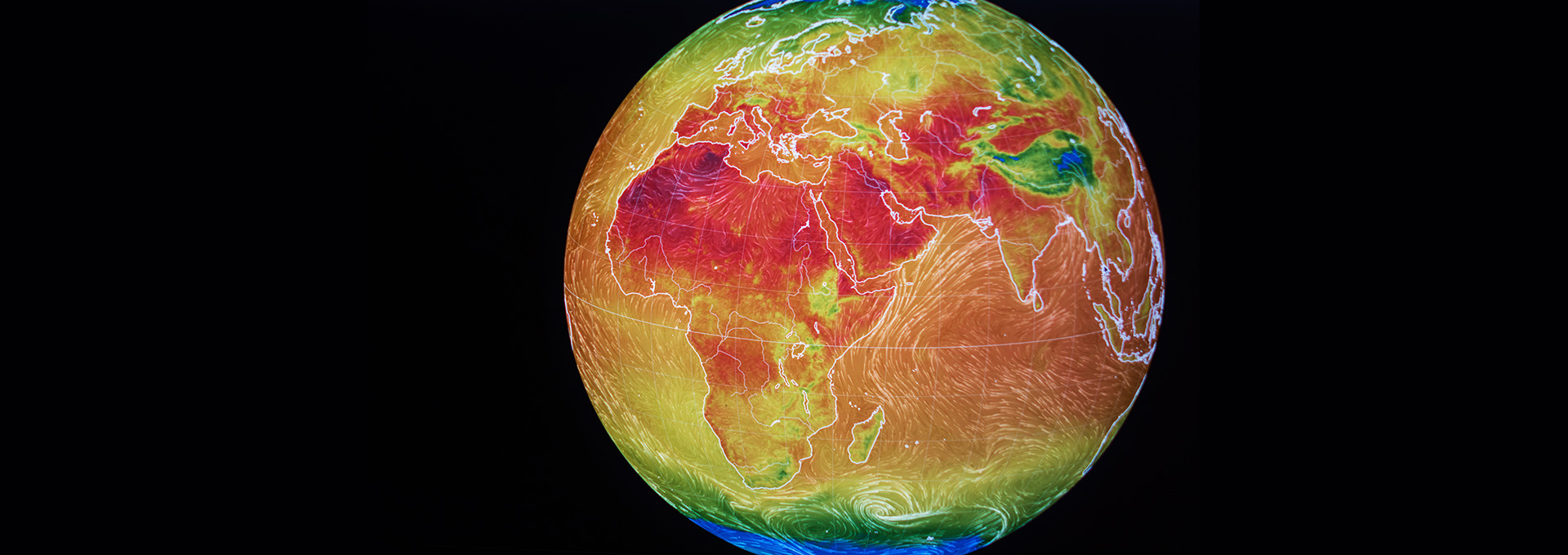
UNEP’s Emissions Gap Report 2026: The Point of Return warns that global temperatures are expected to exceed the Paris Agreement’s 1.5-degree Celsius (1.5°C) threshold above pre-industrial levels. The priority now is to minimise the extent and duration of this overshoot, and establish a pathway back to 1.5°C by the end of the century.
The scale of the challenge is considerable. To achieve the report’s lowest possible overshoot scenario, global greenhouse gas (GHG) emissions would need to fall by 18% by 2030, 45% by 2035, and 69% by 2040, all relative to 2025 levels.
By comparison, even the full implementation of countries’ current Nationally Determined Contributions (NDCs) – their national climate commitments under the Paris Agreement – would deliver emissions reductions of only 5% to 8% by 2030, and 11% to 15% by 2035, relative to the same baseline. Under this scenario, the world remains on track for only approximately 2.6°C of warming this century.
The report also identifies reasons for optimism, citing more opportunities than ever to accelerate action. Renewable energy has expanded rapidly since the Paris Agreement, while successful climate policies have demonstrated that emissions can be reduced. Scaling up these measures could help narrow the gap, putting the world on track for the lowest possible 1.5°C overshoot scenario.
UNFCCC’s 2026 NDC Synthesis Report shows that countries are increasingly integrating climate action into their economic and development policies. Between January 2024 and August 2026, 127 new NDCs, representing 154 parties (including Singapore) to the Paris Agreement, were recorded. Together, they cover approximately 71% of global GHG emissions. These commitments are also becoming more comprehensive, addressing not just emissions reductions but adaptation, climate finance, technology transfer, capacity-building, loss and damage, and just transition.
However, improved planning has not translated into sufficient emissions reductions. The UNFCCC finds that collective progress remains substantially off track to meet the reductions required to keep the 1.5°C goal within reach.
Reducing emissions is only one part of the climate equation. Countries must also prepare for the consequences of rising temperatures, extreme weather and other climate-related risks.
UNEP’s Adaptation Gap Report 2026 examines global progress in climate adaptation, focusing on planning, financing and implementation. It also highlights the status of adaptation finance, efforts to address loss and damage, and the barriers preventing countries from turning adaptation plans into action.
The report reinforces an important distinction, that having a climate adaptation strategy does not necessarily mean having the resources or capacity to implement it. Financing and effective delivery remain critical to building resilience, particularly in countries most vulnerable to climate change.
A closer examination of national performance comes from the Progress of Major Emitters Towards Climate Targets: 2026 Update, produced by PBL Netherlands Environmental Assessment Agency, NewClimate Institute and International Institute for Applied Systems Analysis (IIASA).
Assessing 26 major emitters responsible for approximately 80% of global emissions, the report finds that emissions are projected to peak around 2025–2026 under existing policies. However, the decline thereafter is expected to be limited.
To date, progress has been uneven. While emissions are projected to decrease or stabilise in 13 countries between 2024 and 2035, they are expected to continue rising in the other 13. This means that only half of the 26 countries are on track, or could be on track, to meet their unconditional 2030 climate targets. Among the 19 countries with 2035 targets, 11 are projected to miss their commitments, under current policies.
The findings, similar to those in the UN reports, underline the difference between announcing climate ambitions and putting the necessary policies in place. Countries falling behind need to introduce additional measures or strengthen existing ones.
The recent reports, all published in October 2026, have a common theme. Climate change is increasingly recognised as an economic, social and environmental challenge, and governments are responding with more comprehensive policies, cleaner energy strategies and longer-term commitments. While there are encouraging developments, particularly in renewable energy deployment and the integration of climate considerations into national policymaking, these advances are not yet translating into emissions reductions at the scale and speed required.
Significant work is required to close the implementation gap. Governments need to accelerate the transition away from fossil and coal fuels, strengthen climate policies, improve access to adaptation finance, and ensure that national commitments deliver tangible outcomes.
Related articles on CA Lab: